As we begin the new year, it is helpful to reflect upon our efforts in 2024 to support work that meets the goals contained in the Buzzards Bay Comprehensive Conservation and Management Plan to protect and restore water quality and living resources in Buzzards Bay and its watershed. Highlights of our 2024 activities are included below.
Grant Awards for Habitat Improvement – In March, the Buzzards Bay NEP announced $182,897 in federally funded grant projects that will preserve critical habitat, support fish migration, and improve tidal flow to salt marshes in the Buzzards Bay watershed. The four grants, which are being matched by nearly $90,000 in state, local, and private funds, were awarded by the NEP through CZM, with funding from the EPA Southeast New England Program. The following municipalities received grants:
Fairhaven – $15,000 to purchase a conservation restriction on a 5.75-acre parcel of land to prevent future development, preserve natural resources, and provide passive recreational opportunities to the public. The property, consisting of coastal forest, wetlands, and a perennial stream, immediately connects to over 250 acres of existing conservation land as well as the regional multi-use Phoenix Bike Trail.
Marion – $47,897 to work with the Buzzards Bay Coalition to complete feasibility/conceptual designs to replace two undersized culverts on Delano Road in Marion. The culverts restrict water flow between the expansive wooded wetlands of the Great Swamp and adjacent coastal habitats of Buzzards Bay. The project will provide climate resilience benefits, such as preventing the upstream impoundment of water that causes road flooding and allowing for salt marsh migration with rising sea levels.
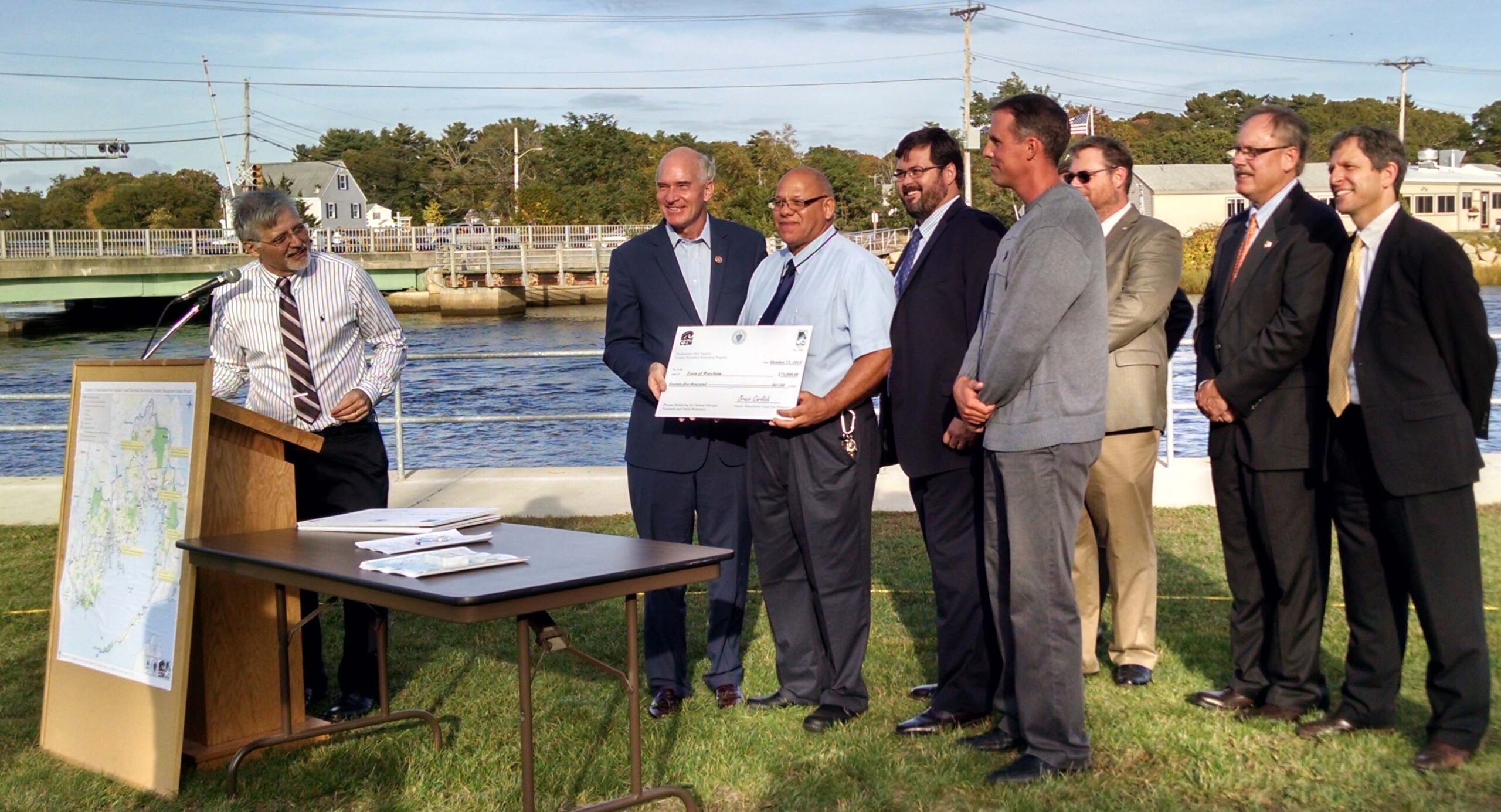
Wareham – $70,000 to work with the Buzzards Bay Coalition to complete feasibility/conceptual designs to support the replacement of a tidally restrictive culvert on Indian Neck Road at the Crooked River. The project will also investigate the partial removal of a dike that restricts tidal exchange within the adjacent Jack’s Marsh. The replacement of these structures will support climate resilience goals by improving tidal exchange to 11 acres of marsh and facilitating future pathways for marsh migration to adjacent low-lying areas in the face of rising sea levels.
Westport – $50,000 to work with the Buzzards Bay Coalition to complete data collection and survey work to advance the replacement of three undersized and deteriorating culverts located on cold water streams. The culverts reduce aquatic connectivity, serve as barriers to native fish migration, and pose risks to public safety. Replacement of these culverts will provide access to critical habitat for migratory fish, including sea-run brook trout, as well as river herring and American eel.
See the press release for more information and the links below for news coverage.
Buzzards Bay towns receive federal grants for culvert replacement, land purchases – CapeCod.com, 3/15/24
Marion receives $47,897 state grant – Sippican Week, 3/18/24
Wareham receives tidal flow grant funding – Wareham Week, 3/18/24
Grant Awards for Water Quality and Habitat Improvement – In September, the Buzzards Bay NEP announced $873,637 in federally funded grant projects that will treat stormwater discharges, evaluate wastewater treatment plant discharge capacity, and protect critical habitat in the Buzzards Bay watershed. The five grants were awarded by the NEP through CZM, with funding from EPA under the Infrastructure Investment and Jobs Act of 2021. The grants also leverage more than $6 million in local, state, and federal funds and in-kind services and help meet Massachusetts’s climate resilience and environmental equity goals. The following municipalities received grants:
Bourne – $375,000 to construct a stormwater treatment system to address contaminated runoff from a parking lot at Queen Sewell Pond beach and to design additional stormwater treatment systems for another outfall near the beach at Bayberry Road. Queen Sewell Pond has been prone to bacteria and nutrient contamination, resulting in harmful algae blooms and beach closures. The proposed project will capture and treat the stormwater runoff before it enters the pond.
Carver and Wareham – $75,000 each to work with the Buzzards Bay Coalition to permanently protect 522 acres in Carver and 215 acres in Wareham. Acquisition of these lands will protect forested uplands, cranberry bogs, and wetlands and will contribute to a growing greenway corridor along the Weweantic River. The Buzzards Bay Coalition will acquire and own the land, and both municipal conservation commissions will hold conservation restrictions in their respective towns. The lands will be used for conservation, restoration, public education, and recreation.
New Bedford – $250,000 to design and permit green infrastructure stormwater treatment solutions at three sites within the Buttonwood Park Zoo. Stormwater runoff from animal enclosures now discharges high levels of bacteria, sediment, and nutrients to Buttonwood Brook. The new stormwater treatment systems will replicate natural processes to trap and filter stormwater prior to reaching local waterbodies to reduce pollutant loads and improve water quality and habitat in the brook and downstream in Apponagansett Bay.
Wareham – $98,637 to evaluate planned increased wastewater flows from the Water Pollution Control Facility. The purpose of the study is to determine if the existing outfall location can accept increased flows from the planned sewer expansion with additional levels of treatment without degrading water quality. The study will also evaluate the benefits of moving the outfall location to other sites.
See the press release for more information and these links for news coverage:
Bourne awarded $375K grant to improve water quality at Queen Sewell Pond from The Enterprise and New Bedford awarded $250,000 to design green infrastructure stormwater treatment solutions at three sites from the New Bedford Guide.
Buzzards Bay Targeted Grants – With funding from the Southern New England Program’s (SNEP) Clean Water Act Section 320 funds and the Bipartisan Infrastructure Law funds, the Buzzards Bay NEP was able to provide targeted grant support to the following programs:
Baywatchers Program – The NEP continued to support the Buzzards Bay Coalition’s Baywatchers water quality monitoring program with a $65,000 grant. For 32 years, Baywatchers has collected basic water quality, nutrient, and algal pigment information around Buzzards Bay during the summer and educated the public on local water quality. Since 1992, this effort has directly engaged more than 1,000 citizen scientists and has resulted in an impressive dataset of long-term trends for the ecological health of over 200 locations around the Bay.
Monitoring Nutrient Inputs to Buzzards Bay from Coastal Rivers – Discharges of nitrogen and phosphorus into coastal rivers are a major source of these nutrients in Buzzards Bay. Although the water quality in the estuarine embayments has been monitored for 32 years as part of the Buzzards Bay Coalition’s Baywatchers program, the nutrient input contributed by rivers remains poorly understood. Quantifying these nutrient flows is important for validating watershed pollutant loading models and for understanding how residential and commercial development, land and agricultural management, and ecological restoration activities influence nutrient delivery to Buzzards Bay. Because climate change will bring increasingly variable precipitation to the Northeast, understanding river-borne sources of nutrients to Buzzards Bay will also be critical to addressing future nutrient loads to the Bay. The NEP provided a $45,948 award to the Woodwell Climate Research Center of Woods Hole to continue a monitoring effort led by Woodwell scientist Chris Neil for a third year. This funding helped pay for continuous monitoring equipment and laboratory testing to measure nitrogen inputs to Buzzards Bay from coastal rivers.
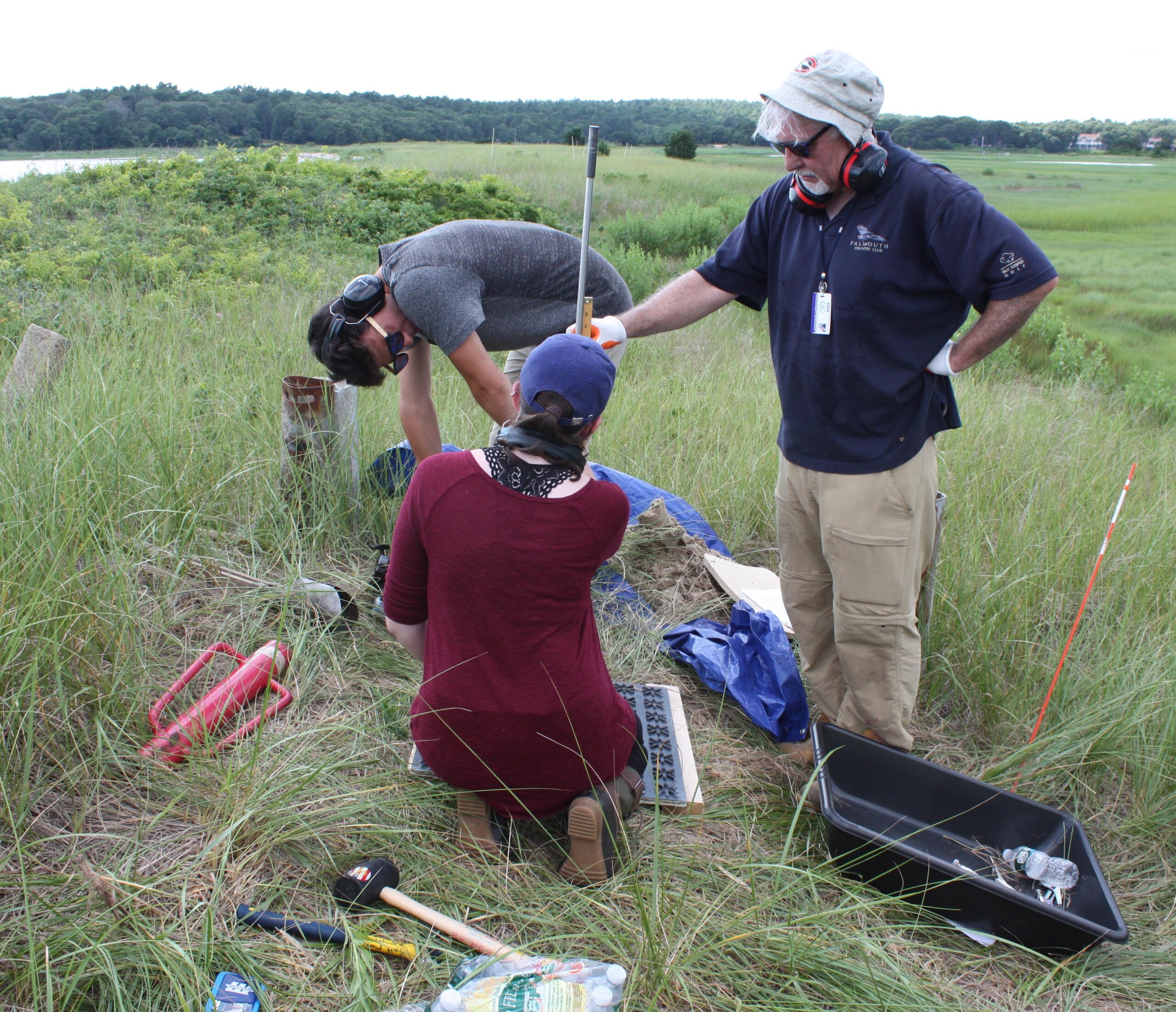
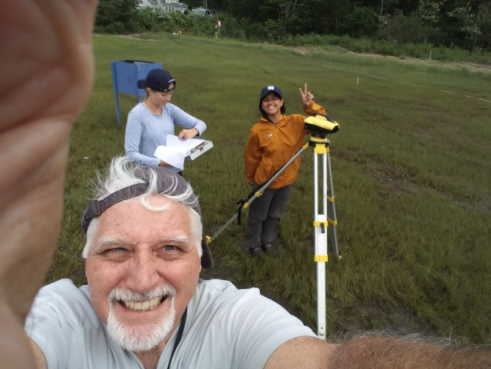
Buzzards Bay Long-Term Salt Marsh Study – Salt marshes in Buzzards Bay play a vital role by providing habitat, regulating water quality, and stabilizing coastlines. In recent years, many coastal communities have experienced degradation or loss of salt marshes. To better understand and halt this trend, the Buzzards Bay NEP continued to provide technical support to the Buzzards Bay Coalition and scientists at the Woodwell Climate Research Center for a fourth year to track salt marsh loss in Buzzards Bay principally caused by factors related to climate change. The NEP is interpreting historical aerial photographs and processing elevation data from Global Positioning System (GPS) and field surveys. In addition, the UMass Dartmouth Civil and Environmental Engineering program, with students of Professor Dan MacDonald, continued their effort for a third year. A $49,670 award for this project enabled UMass Dartmouth to conduct field surveys using Unmanned Aircraft Systems. The imagery will be processed with photogrammetry software to generate highly detailed Digital Surface Models and georectified true color imagery. UMass Dartmouth will use existing National Geodetic Survey rod benchmarks installed by the Buzzards Bay NEP as elevation controls. The work will continue through 2025. For more information on the marsh studies, see this Buzzards Bay NEP web post.
New Bedford Public Schools Sea Lab Summer Program – The Sea Lab Marine Science Education Center is a New Bedford Public Schools summer school program supported through tuition and the Local Education Agency. One of the fundamental elements of the Sea Lab program is a focus on providing educational equity for all public-school students. For a third year, the NEP supported Sea Lab with a $25,889 award. The funding provides scholarships to up to 40 financially disadvantaged students in support of environmental justice goals and funds a field trip to Cuttyhunk Island in Buzzards Bay, a whale watch off Cape Cod, and various supplies and instructional aids for the program.
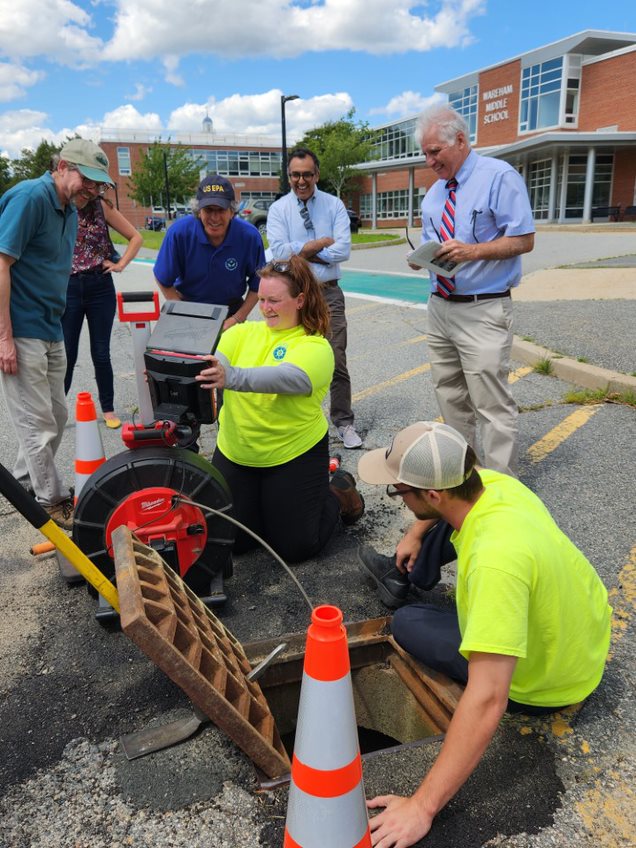
Buzzards Bay Stormwater Collaborative – The Buzzards Bay Stormwater Collaborative is a partnership between the NEP, Massachusetts Maritime Academy (MMA), and eight Buzzards Bay watershed municipalities (Acushnet, Bourne, Dartmouth, Fairhaven, Marion, Mattapoisett, Wareham, and Westport). Its focus is to monitor stormwater discharges and map stormwater networks (particularly those contributing to shellfish bed closures) and other municipal stormwater discharges covered under federal Municipal Separate Storm Sewer System (MS4) stormwater permits. In 2024, the NEP continued its support with a $127,042 award to MMA using EPA funds from the Bipartisan Infrastructure Law to support an MMA program manager and certain administrative costs of MMA co-op students in the program. The students are funded directly by the municipalities in the Collaborative. In 2024, local contributions totaled $88,500 cash, plus municipal in-kind services from staff working with students in the field collecting samples. The Buzzards Bay NEP continues to provide technical oversight, GIS management, data processing and analysis, and free laboratory testing services to municipalities in the Stormwater Collaborative. Training videos for the program can be found at the Buzzards Bay Stormwater Collaborative YouTube channel. For additional information, including an updated interactive map of stormwater infrastructure and discharge water quality data, see the Buzzards Bay Stormwater Collaborative page.
Interactive Stormwater Maps – The NEP added four new interactive maps in support of the Buzzards Bay Stormwater Collaborative. The maps help to evaluate stormwater outfalls, show the status of illicit discharge detection and elimination investigations, and provide strategies for MS4 initiatives. The Sampling Dashboard is designed for use on smart phones and supports field investigations. The new mapping products are available on the Buzzards Bay Stormwater Collaborative website.
Technical Assistance – The Buzzards Bay NEP continued to assist municipalities and other partners with GIS analysis, proposal development, review of local projects, and training and support for municipal stormwater MS4 permit compliance. The NEP provided more than 800 map and GIS products to the Buzzards Bay Coalition, area land trusts, and municipalities in their efforts to protect important habitat and open space in Buzzards Bay. The Buzzards Bay NEP continues to work with the Buzzards Bay Coalition Science Advisory Committee and a team of scientists in Woods Hole to identify pressing issues related to climate change, nitrogen and toxic pollution, and loss of wetlands habitat and living resources in Buzzards Bay.
Southern New England Program Support – The Buzzards Bay NEP is an advising partner to EPA in implementing SNEP and is a supporting partner to several SNEP and MassDEP grant awards.
Watershed Assessment – The Buzzards Bay NEP is continuing its support of a Buzzards Bay Coalition five-year watershed protection effort on Apponagansett Bay funded under the SNEP Pilot Watershed Initiative. The SNEP funding has helped the Town of Dartmouth and City of New Bedford identify and prioritize sources of watershed impairments and develop solutions to address stream alteration and nutrient loading in an urbanized section of the Buttonwood Brook-Apponagansett Bay area of Massachusetts. The NEP is supporting the effort by providing land use analysis and GIS services during the five-year project to advance total maximum daily load (TMDL) development. The program has paid dividends in generating three additional infrastructure grants totaling more than $1 million from state and federal agencies.
TMDL Assessment – The NEP is continuing to work with the Town of Bourne and the Buzzards Bay Coalition on a MassDEP 604(b) grant to conduct a TMDL assessment for Red Brook Harbor Phinneys Harbor Complex in the Town of Bourne and a similar assessment for Apponagansett Bay in the Town of Dartmouth. The NEP tasks include conducting GIS analyses of watershed land use, including the number of onsite systems; determining occupancy rates for census data; and determining land use types, including estimates of impervious area, lawn area, extent of sewering, and assessment of pollutant loadings.
Runnel Study – The NEP is continuing to provide technical support to a Runnel Study that is a collaboration between Towson University, the Woodwell Climate Center, and the Buzzards Bay Coalition. Scientists are looking at how the use of runnels—constructed shallow drainage meanders—may promote revegetation in upper areas of salt marsh that are dying off from standing water. The results of this work will help town officials and state and federal mangers develop possible mitigation strategies to protect and restore salt marshes. The NEP is documenting changes in marsh boundaries and processing GPS and elevation data for the study. Assistant Professor Alice Besterman of Towson University is lead investigator.